DDwight R.Verified Buyer
Item: Green
Staked 30 tomatoes in about fifteen minutes. Last year the same job with twist ties took me a whole Saturday morning. It really is one squeeze per tie.
2 weeks agoYour cart is empty
Add items to get started
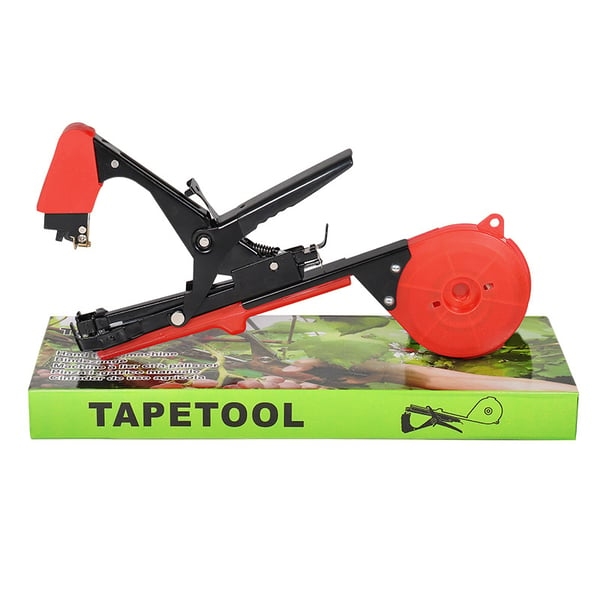
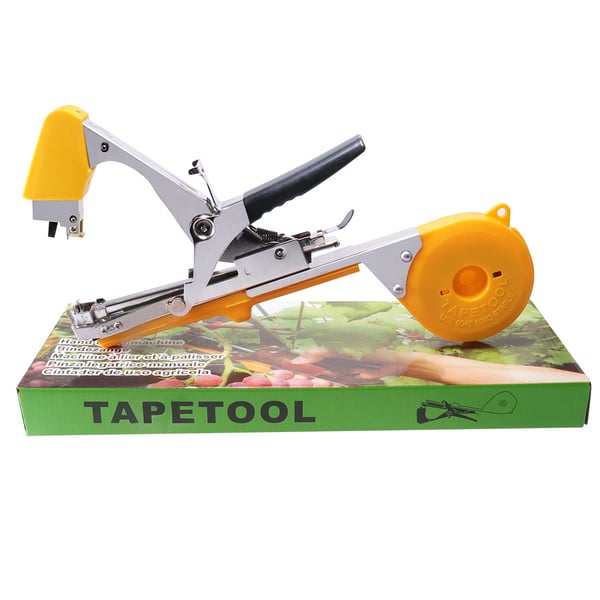

Official StorePlant Tying Machine — Garden Tapener for Tomatoes, Grapes & Vines

Staked 30 tomatoes in about fifteen minutes. Last year the same job with twist ties took me a whole Saturday morning. It really is one squeeze per tie.
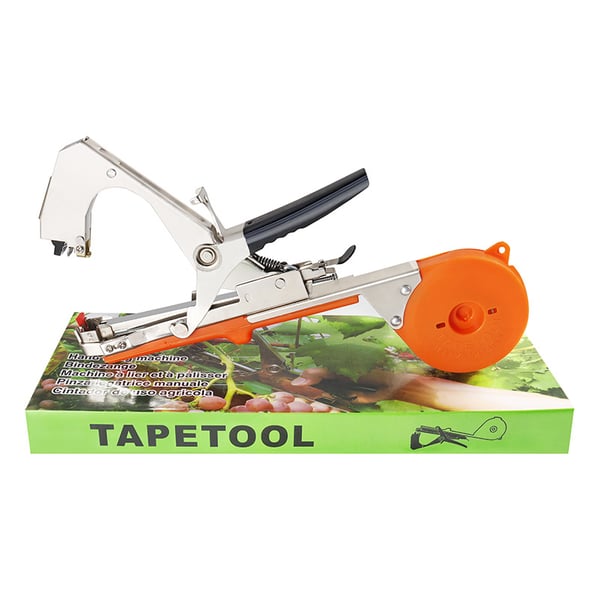
2 weeks agoI have arthritis in both hands and knots had become the thing I dreaded about the garden. This I can work one-handed. Got orange so I can find it in the leaves.
3 weeks agoRuns the length of my grape trellis without complaint. The steel jaw feels like the part that matters was not cheaped out on.
4 weeks agoThe tapener itself is exactly what I hoped for and I have no complaint about the shop at all. The courier is another matter — they left my parcel at the wrong address and I only got it two days later because a neighbour walked it over. That one is on the delivery company, not the seller.
5 weeks agoMy cucumbers kept pulling off the netting every windy week. Now I retie in seconds instead of fighting with string, so I actually keep up with it.
3 weeks agoGood tool and I genuinely enjoy using it — done the whole tomato row and the grape canes with it and it has not missed a tie yet. Only thing keeping it off five stars is that I had to pay for shipping on top. At this price I would love to see free delivery.
2 weeks agoProduct is good, works just like the video shows and the steel jaw feels solid. It did take 7 days to reach me though, which is longer than I am used to. Not a dealbreaker, just plan ahead if you have a job waiting in the garden.
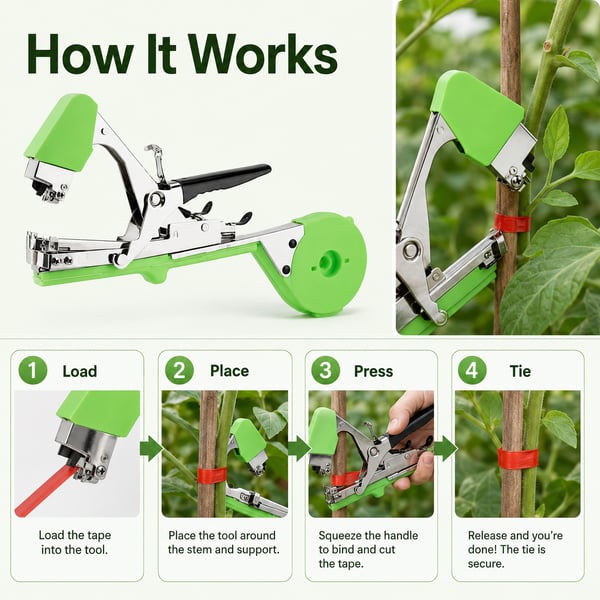
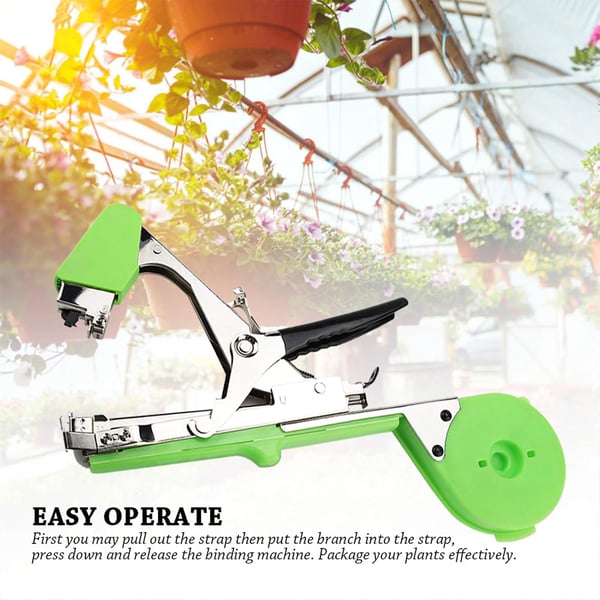
3 weeks agoSqueeze once and the stem is tied — no knots, no twist ties
❤️ TIPS: All goods are authentic, with genuine patents, counterfeit must be investigated! Customers, please identify our products

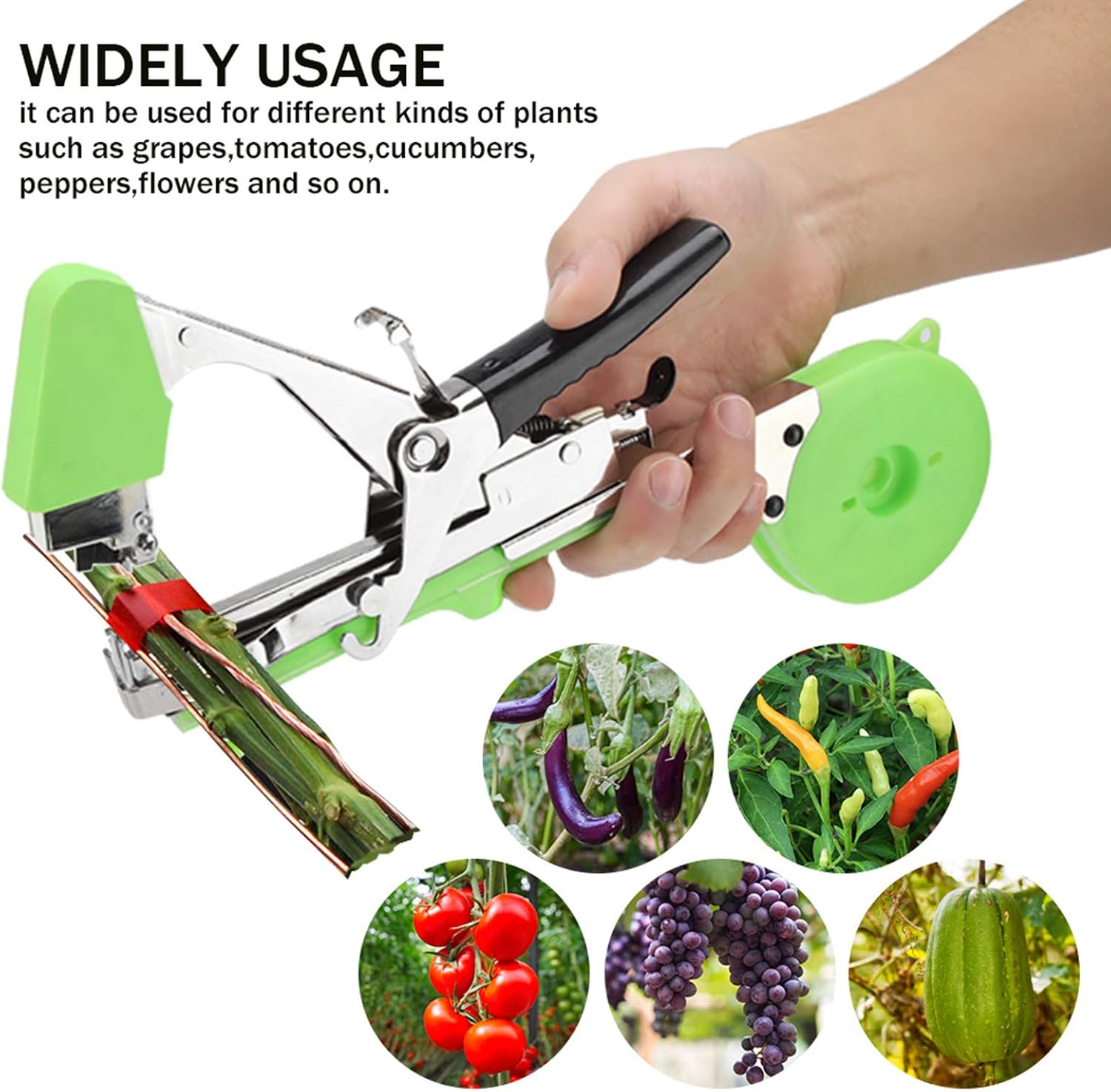
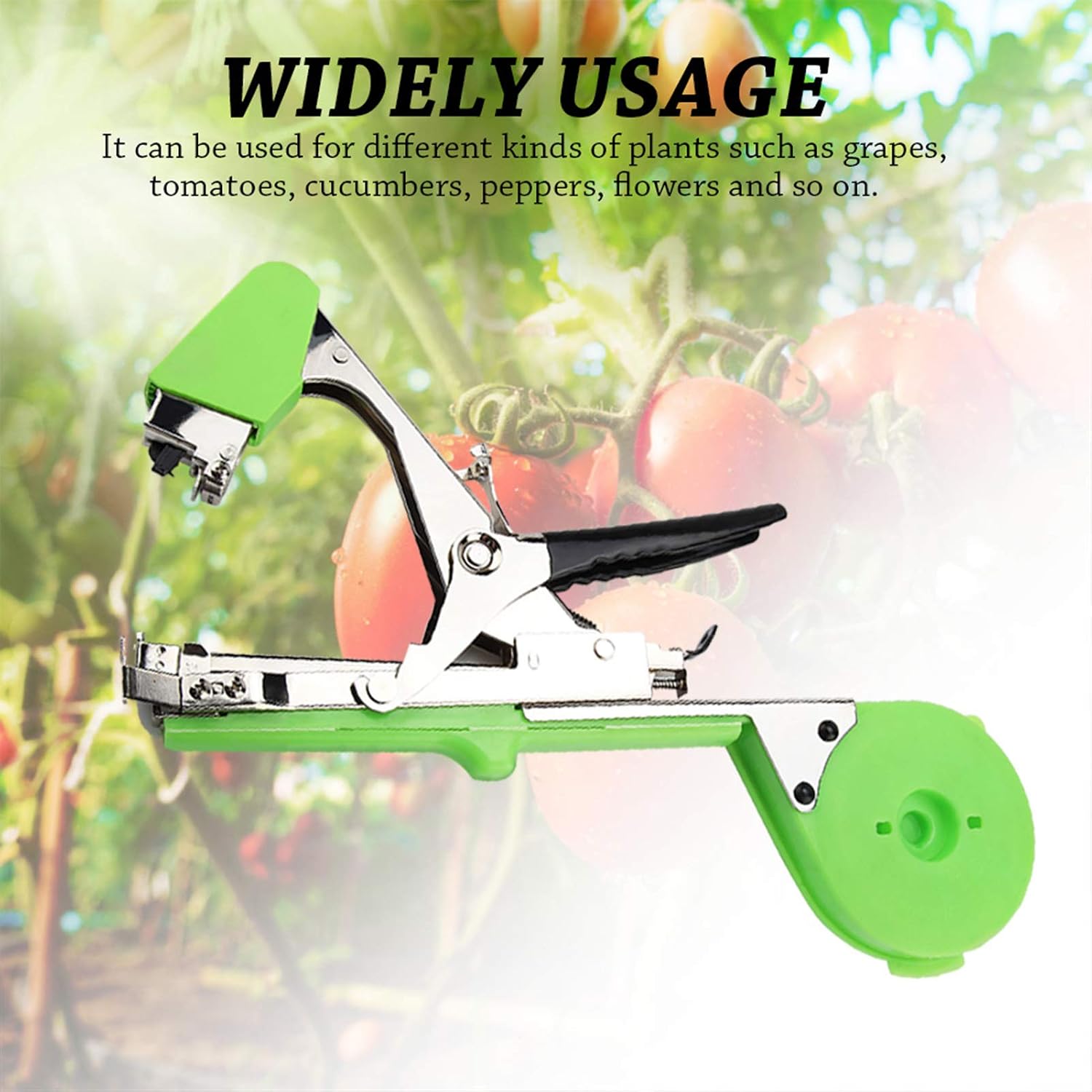
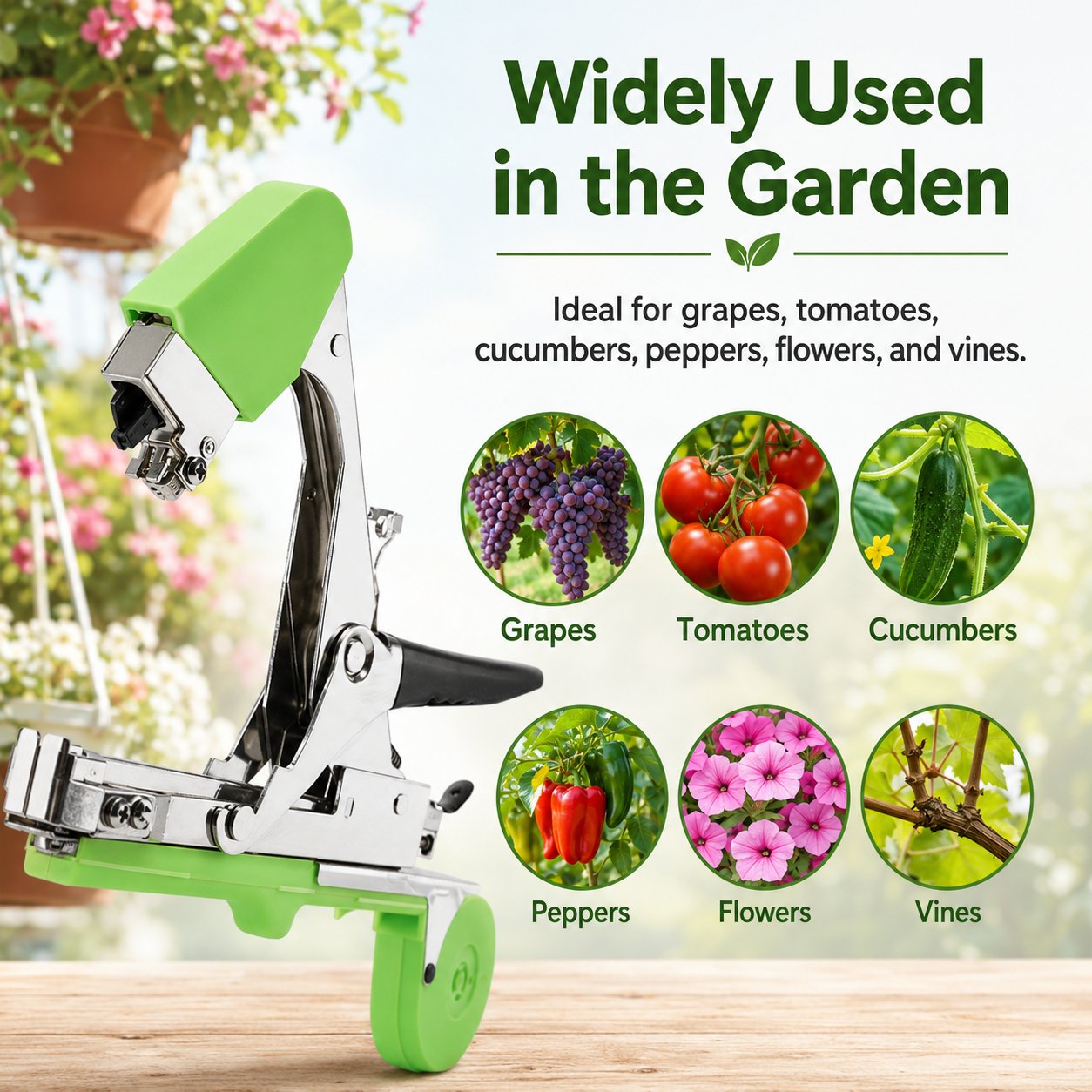
This manual plant tying staple gun is designed for fixing and binding grapes, tomatoes, cucumbers, peppers, garden flowers, vine branches, and other climbing plants. It helps keep plants neatly supported and makes gardening work faster and more organized.


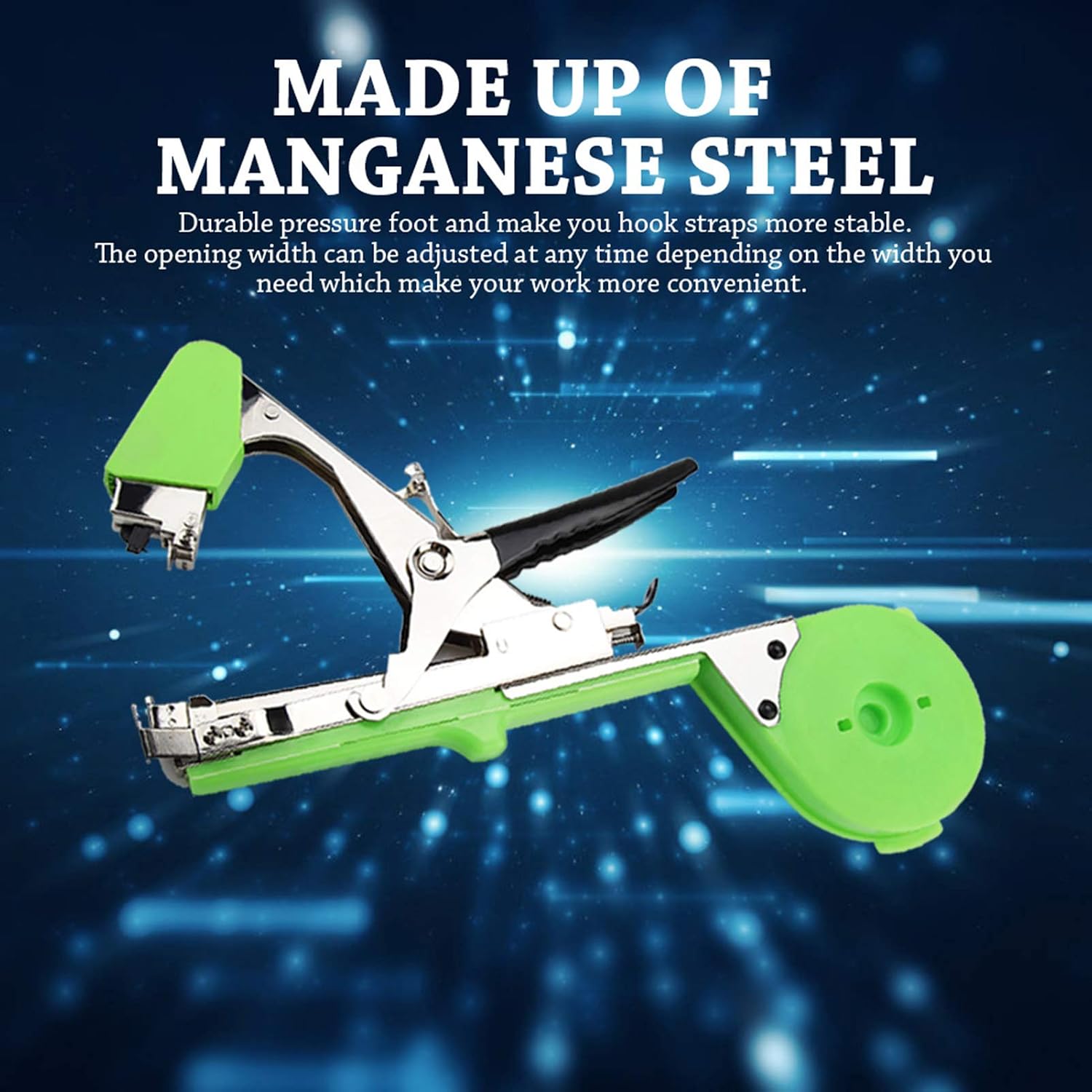
The opening width can be adjusted to suit different plant stems and branches. Simply press the handle to tie plants securely without damaging them, making the process several times more efficient than traditional hand tying.

Made from sturdy manganese steel, this gardening tape tool is built for strength, wear resistance, and long-lasting use. Its durable structure is suitable for repeated garden, greenhouse, orchard, and farm work.

The ergonomic plant tying tape tool is easy to carry, store, and use during busy gardening seasons. It helps save time and effort, allowing you to complete plant support tasks quickly and spend more time on other garden work.

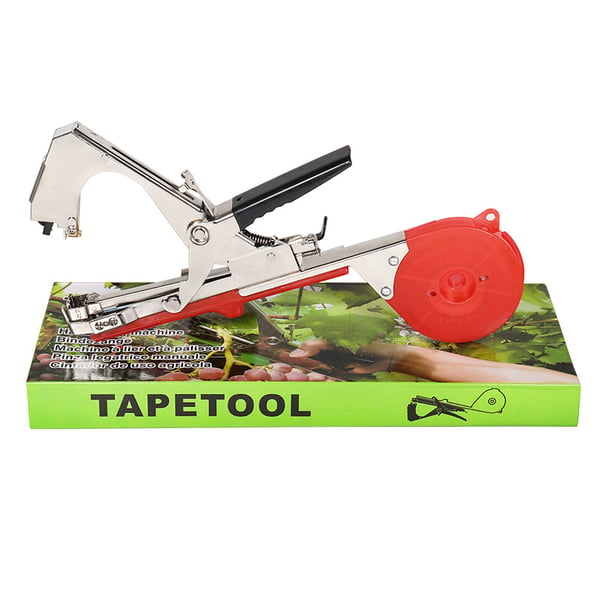
The package includes 1 tapener garden tool, 1 bag of accessories, and 1 manual. It provides the essentials needed for convenient plant tying, making it a practical helper for home gardeners, growers, and plant care enthusiasts.

